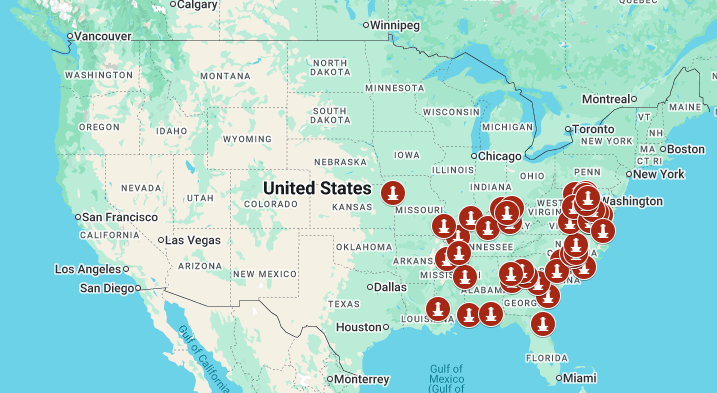
The forty-five examples included in this study span almost all Confederate and border states that provided men for the Confederate cause.
This map helps to illuminate both the breadth of the movement and the patterns that can be discerned from the spatial relations of monuments. Locating monuments in their space helps to put their history back into real, physical locations, as opposed to isolated abstract ideas contained only in our minds.
Click on the map below to interact with it.
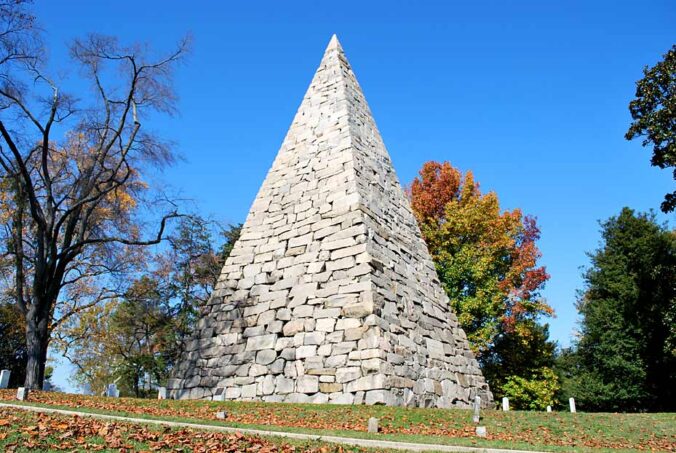
Something to consider when viewing these monuments:
The Athens Ladies Memorial Assocation, in defining the qualities they wanted in a monument, said it should be “as white and spotless, as the cause for which they died was pure and holy.”1
- Akela Reason, “Heritage and Hate: Teaching Confederate Monuments with Archives,” Panorama: Journal of the Association of Historians of American Art 5, no. 2 (Fall 2019), 4, https://doi.org/10.24926/24716839.2216. ↩︎